
Mineralogy Certification Course
What is Mineral Luminescence?
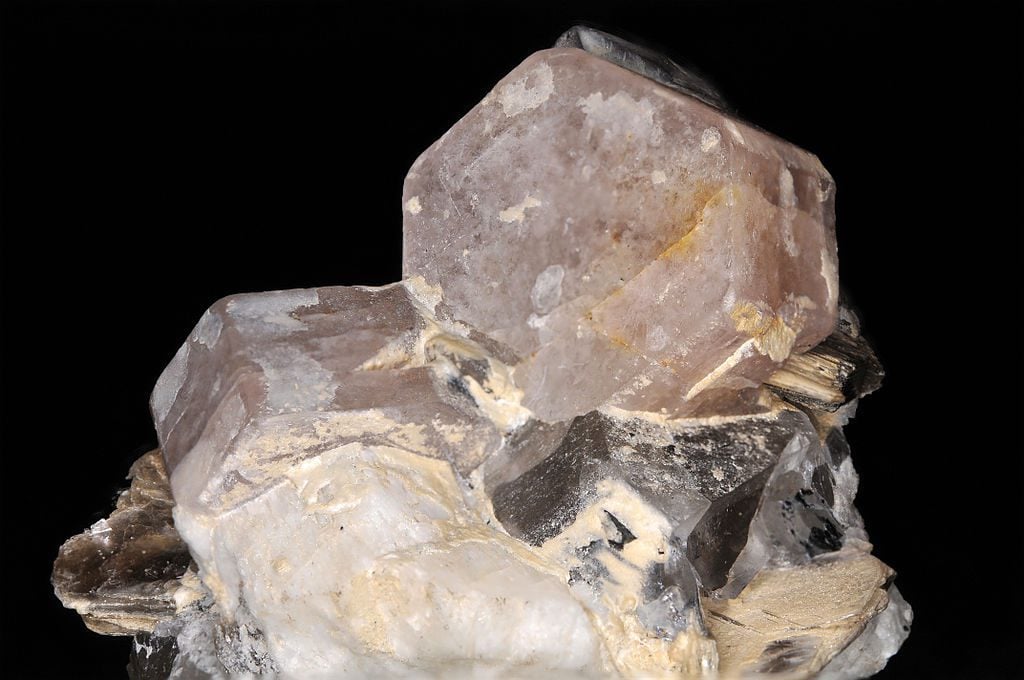
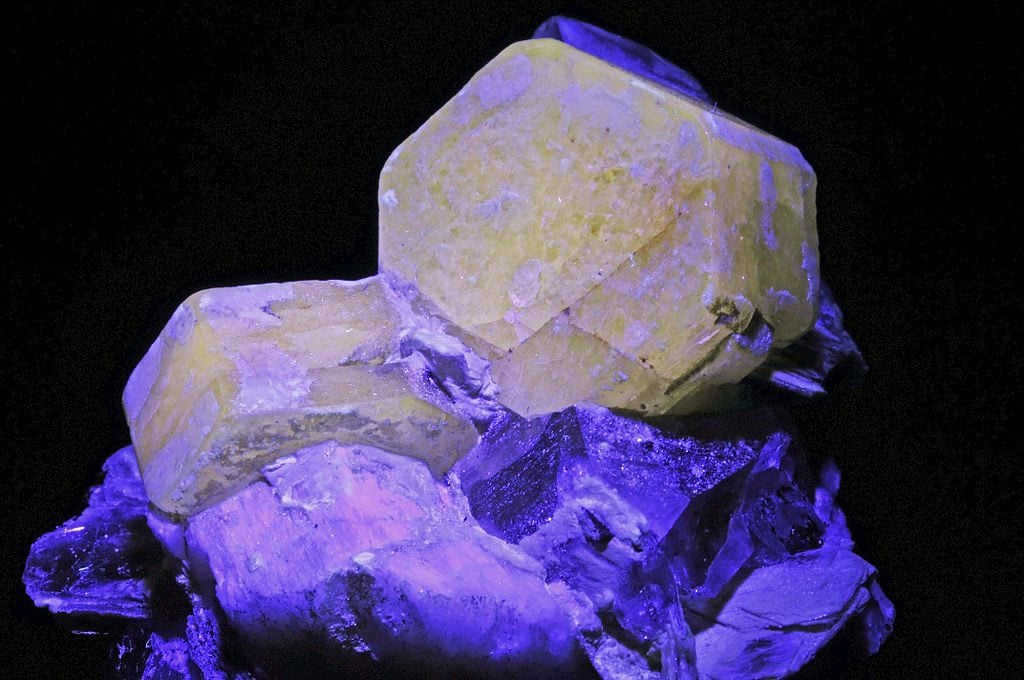
Some minerals glow or fluoresce under ultraviolet (UV) light, such as some shown here. Apatite, quartz, orthoclase feldspar, and muscovite under normal white light and UV light. Photos by Géry Parent. Licensed under CC By-SA 3.0.
What Can Luminescence Indicate?
Luminescence can help mineralogists differentiate between certain natural and synthetic minerals. However, for identification purposes, mineralogists should analyze luminescence in conjunction with other tests. Collectors also prize crystal specimens with spectacular luminescent displays.
What's the Difference Between Fluorescence and Phosphorescence?
If the absorbed energy is released almost immediately, the effect is called fluorescence.
If there is a delay in the release of the energy (ranging from seconds to hours), the effect is then called phosphorescence.
What Kind of Energy Causes Luminescence?
X-rays, visible light, and even heat can provide the energy to excite the electrons in minerals. However, mineralogists most commonly use ultraviolet light (UV) to trigger gemstone luminescence.
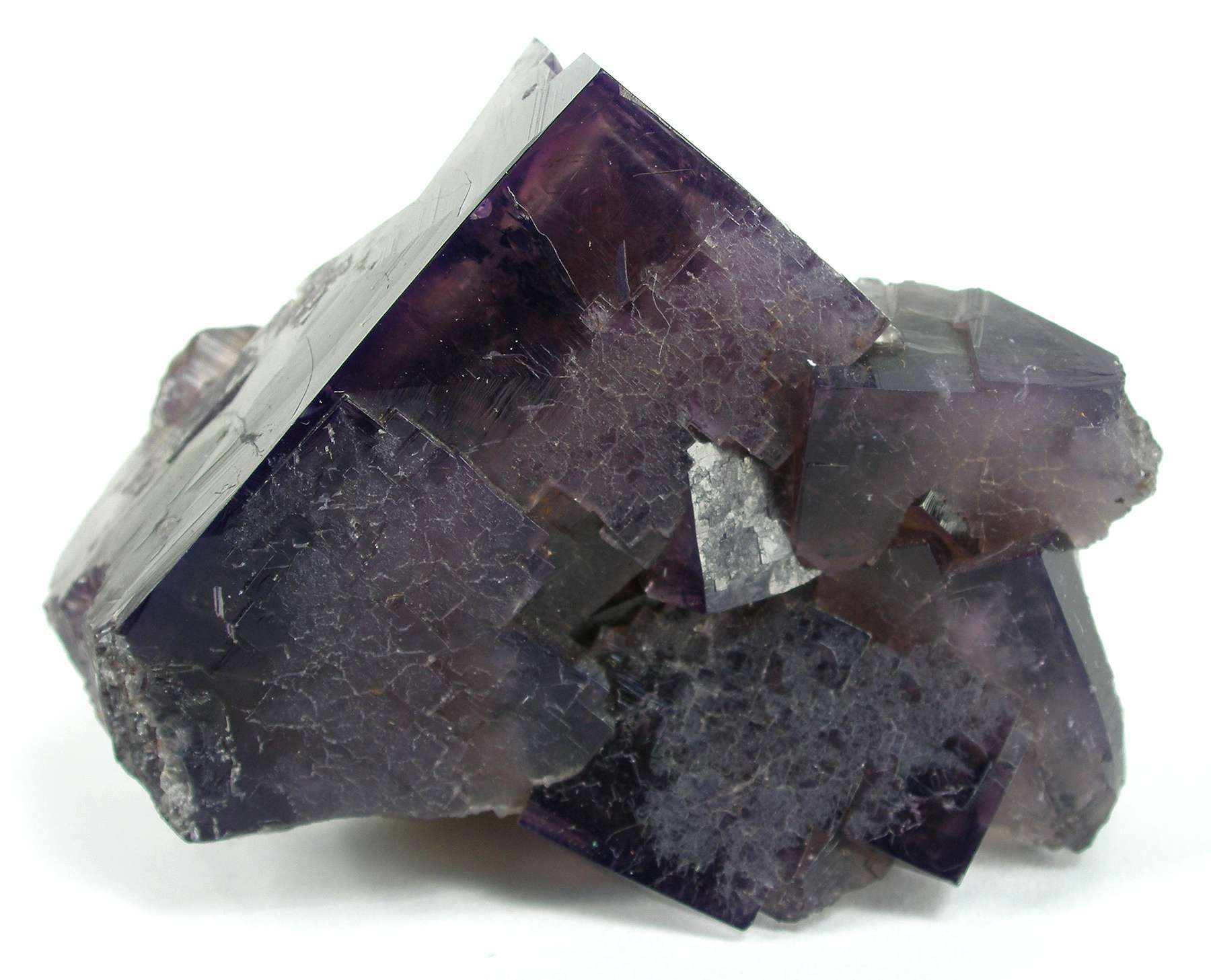
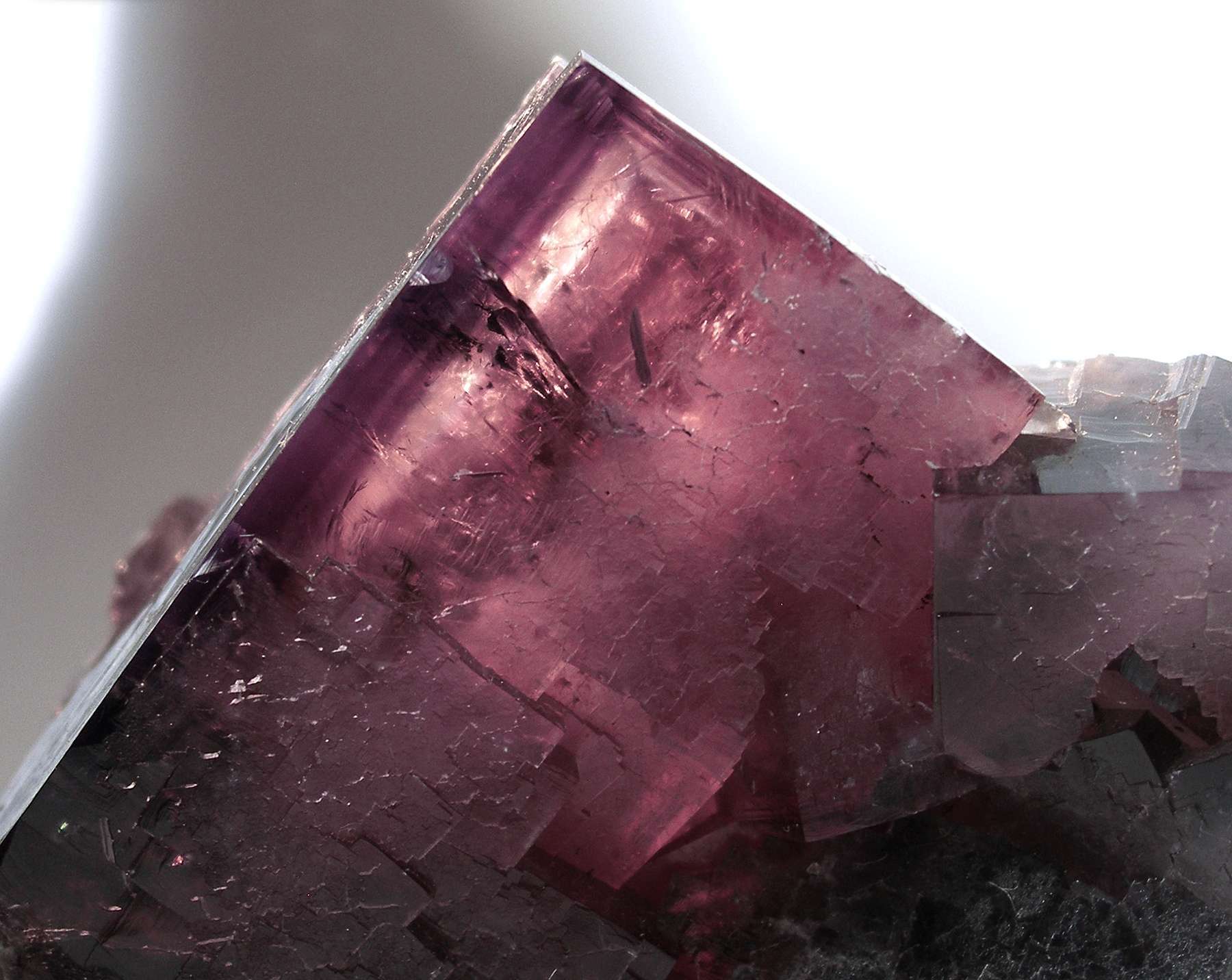
Some minerals fluoresce even in normal visible light or daylight. When backlit with daylight or halogen light, the transparent areas of this lavender fluorite crystal fluoresce an intense "grape juice" purple. 7.7 x 5.7 x 5.3 cm, Greenlaws Mine, Daddry Shield, Weardale, North Pennines, Co. Durham, England. © Rob Lavinsky, www.iRocks.com. Used with permission.
What is Longwave and Shortwave Ultraviolet Light?
There are two kinds of UV light, longwave (LW) and shortwave (SW).
LW UV light has a wavelength of 3660 Å (or 366 nm). Fluorescent lamps can generate LW UV light.
SW UV light has a wavelength of 2587 Å (or 258.7 nm). Special quartz tubes can generate SW UV light.
Some minerals display luminescence in LW, some in SW, some in both, and some in neither. Minerals from different sources may also have different luminescent properties.
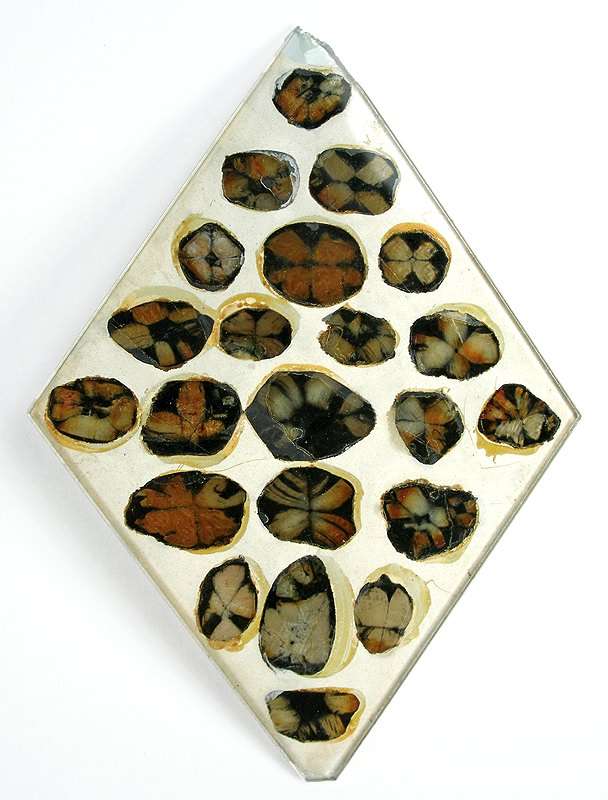
In many cases, UV light won't excite a mineral unless it contains an impurity element that functions as an activator. The element manganese, for example, plays such a role in many minerals. Conversely, the element iron quenches fluorescence in most minerals.
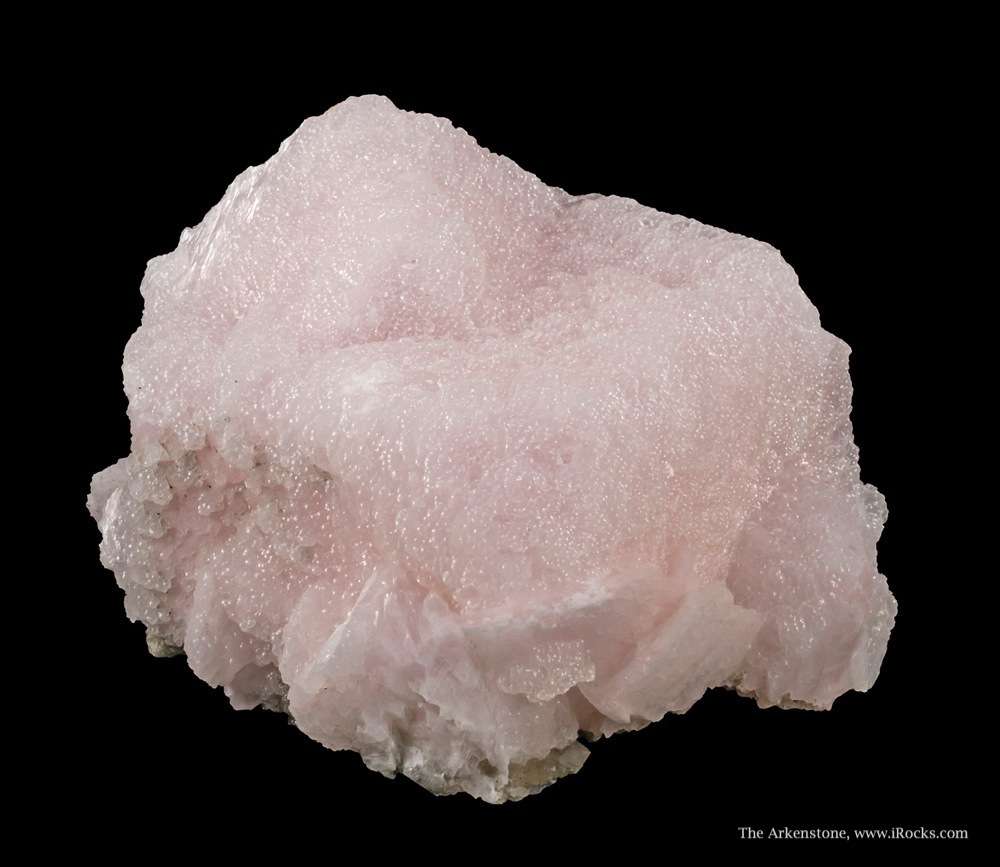
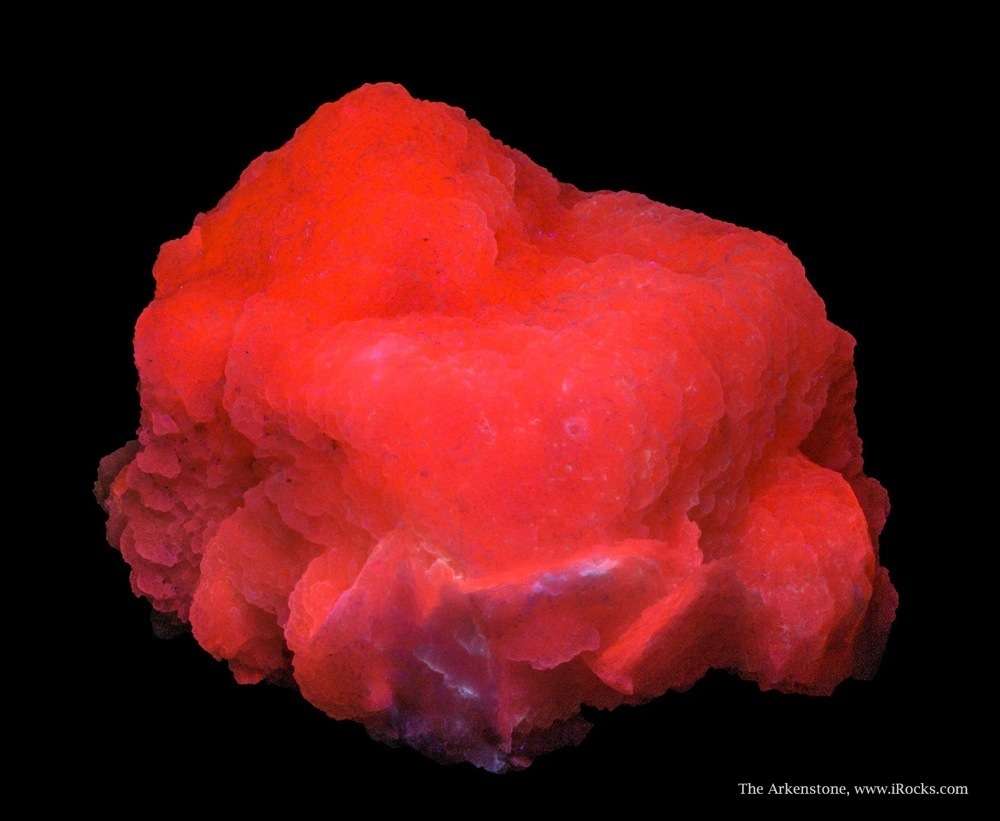
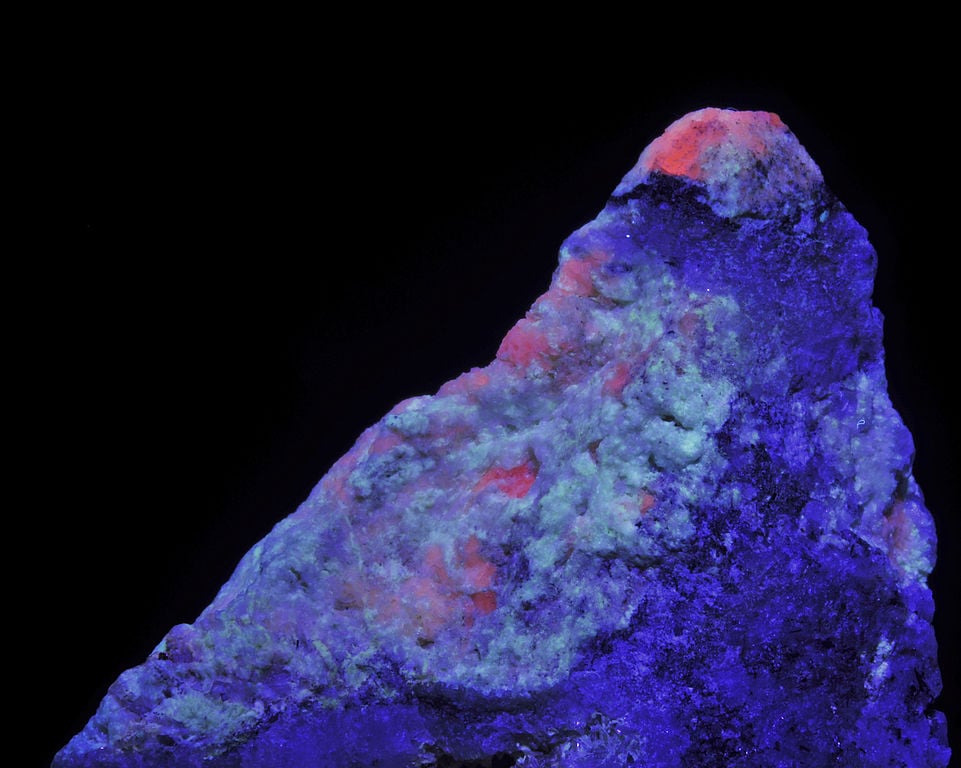
This pink manganoan (manganese-rich) calcite fluoresces a vibrant reddish orange. 13.5 x 10.5 x 10.1 cm, Huanggang Mines, Keshikteng, Ulahad Bnner, Inner Mongolia A.R., China. © Rob Lavinsky, www.iRocks.com. Used with permission.
Editor's Note: The original article has been updated and adapted for the Mineralogy Certification course.


