Mineralogy of Halides, Carbonates, and Sulfites
Halides, carbonates, and sulfites are sedimentary minerals with many uses, from salt to manufacturing. Learn how to identify these minerals.
18 Minute Read
Introduction to Halides, Carbonates, and Sulfites
Mineralogists study halides, carbonates, and sulfites (not “sulfides”) together because most of the minerals in these classes form in similar environments and are chemically deposited from water. Sulfites’ connection to halides and carbonates will help you remember how to differentiate them from sulfides.
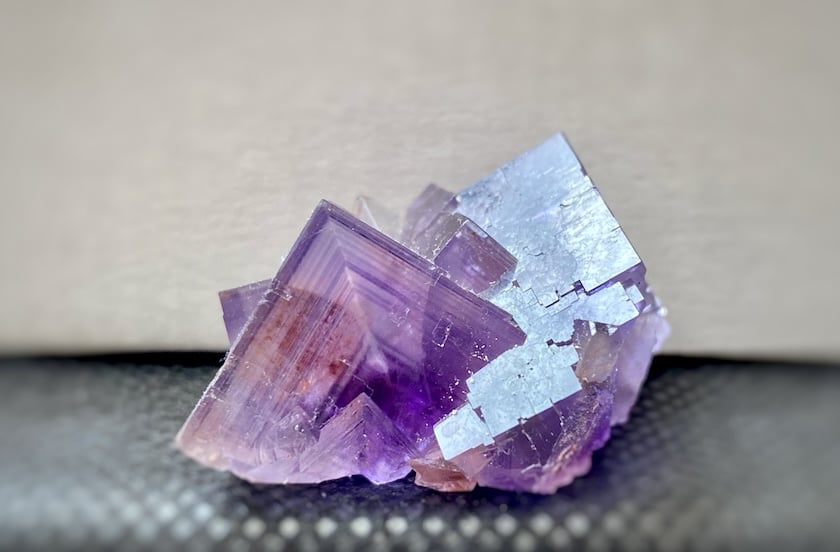
Halides, carbonates, and sulfites have many similar physical properties. Most of these minerals are light colored (colorless or white, gray, ivory, yellow, orange), transparent to translucent, with vitreous luster, low density (specific gravity), and low (2 for gypsum) to medium (4.5 for magnesite) hardness. This makes differentiating mineral species within these classes quite challenging. These minerals also occur in various crystal forms, from perfectly symmetrical, well-formed crystals to nodular, botryoidal, stalactitic, columnar, fibrous, granular, and massive aggregates. Crystal twinning is common.
Evaporite Minerals
Evaporites are salt rocks originally precipitated from a saturated surface or near-surface brine in hydrologies driven by solar evaporation. (Warren, 2016) “Salt” refers to the chemical compound, not just common table salt. Hydrologies are different water reservoirs like seas, lakes, rivers, and their separate components.
Many halides, carbonates, and sulfites form due to water
…