Mineralogy of Cyclosilicates and Inosilicates
The silicate subgroups of cyclosilicates and inosilicates include beryl, tourmaline, jadeite, and nephrite. Learn to identify these minerals.
18 Minute Read
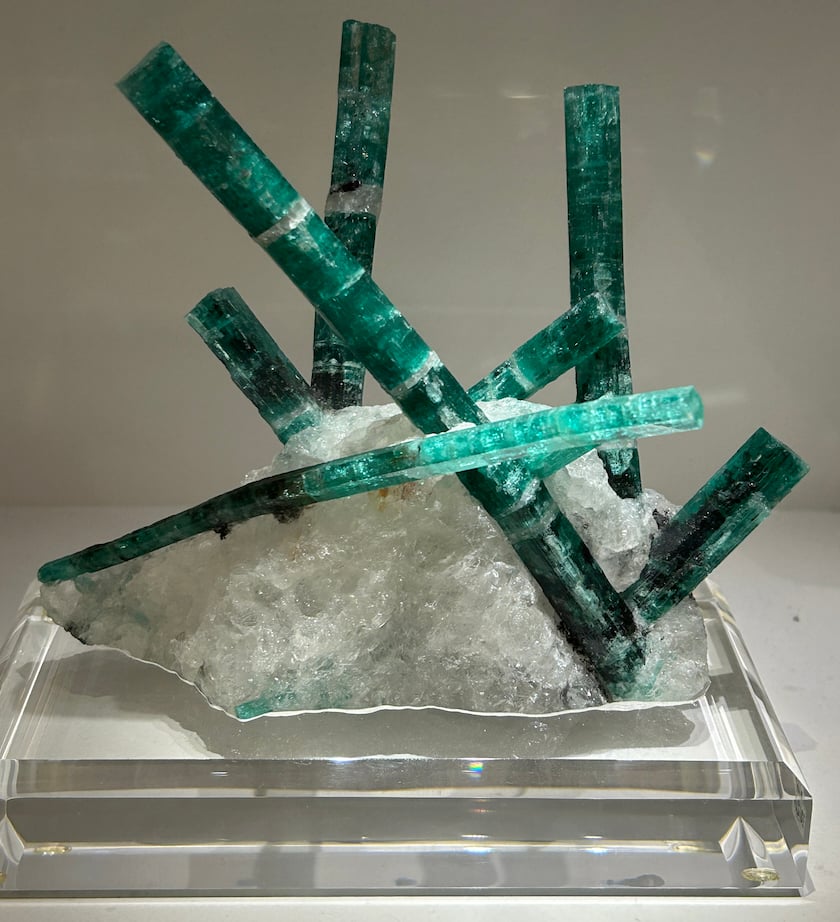
Crystal Chemistry of Cyclosilicates and Inosilicates
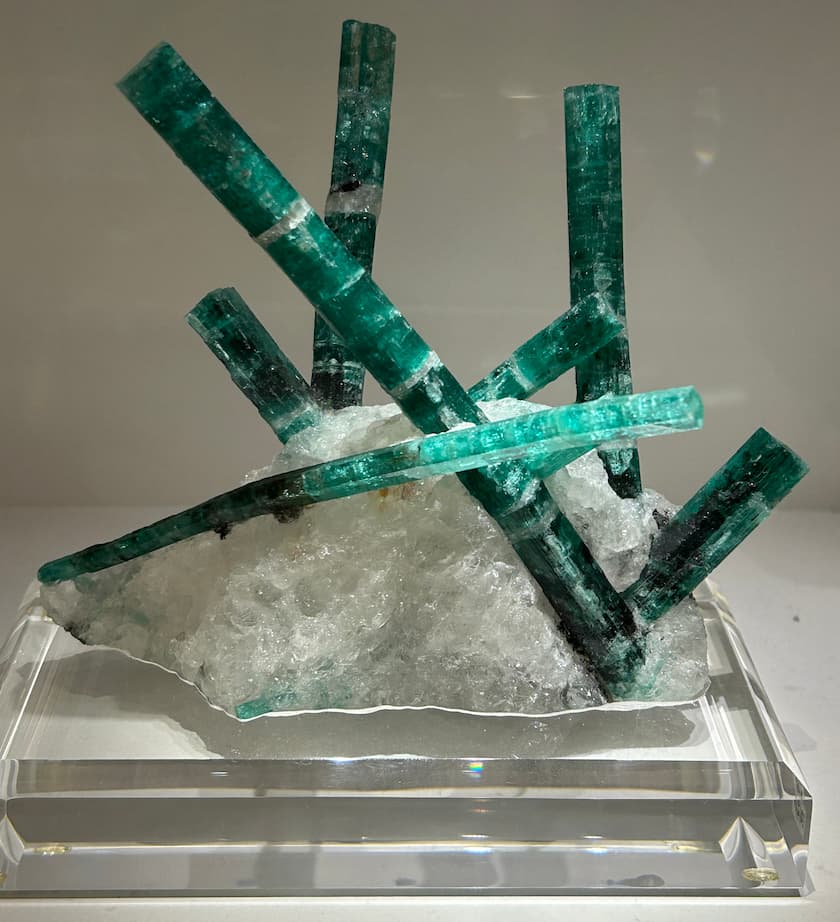
Cyclosilicates and inosilicates are two subclasses of silicate minerals. They include numerous mineral groups and important mineral species. The cyclosilicates most familiar to gemologists are beryls and the tourmaline supergroup. Inosilicates are subdivided into single-chain silicates, which includes the pyroxene supergroup, and double-chain silicates, which includes the amphibole minerals. The gem material gemologists call jade actually includes both pyroxene (jadeite) and amphibole (nephrite) members.
Introduction to Cyclosilicates
Cyclosilicate units form by joining three, four, or six SiO4 tetrahedrons into closed rings.
- Three joined tetrahedrons create a three-member ring with a [Si3O9]6- structural unit.
- Four joined tetrahedrons create a four-member ring with a [Si4O12]8- structural unit.
- Six joined tetrahedrons create a six-member ring with a [Si6O18]12- structural unit. Six-member rings are the most common type of cyclosilicates.
Benitoite (BaTi[Si3O9]), the rare state gem of California, is an example of a
…