Synthetic Gemstone Inclusions
Identifying lab-created gems is a critical skill for gemologists. Learn how to spot the most common synthetic gemstone inclusions.
4 Minute Read
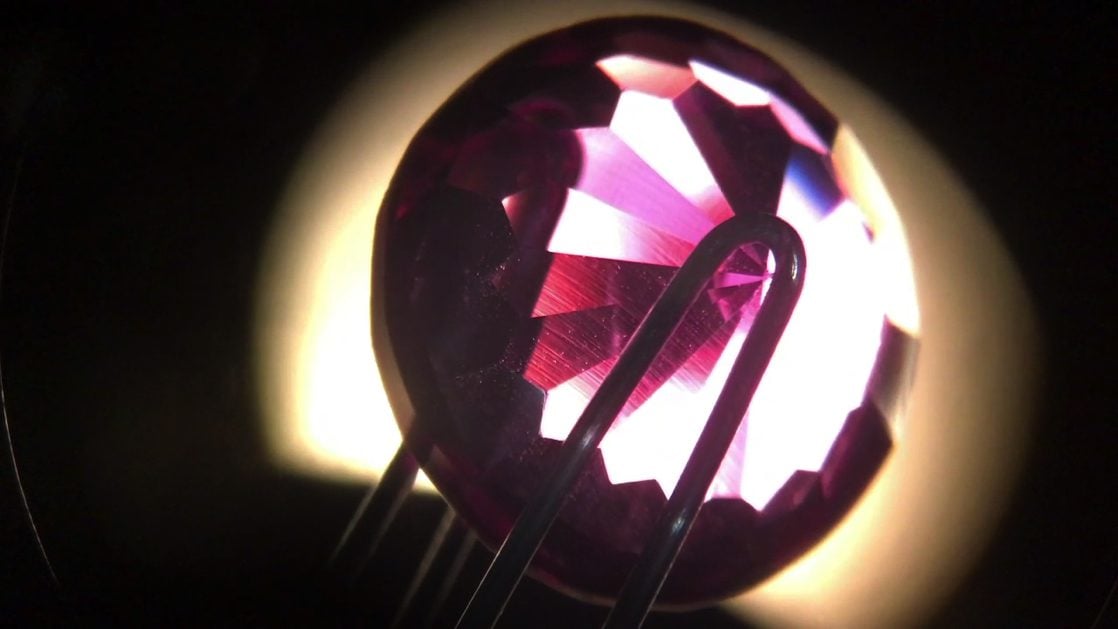
Curved Striae
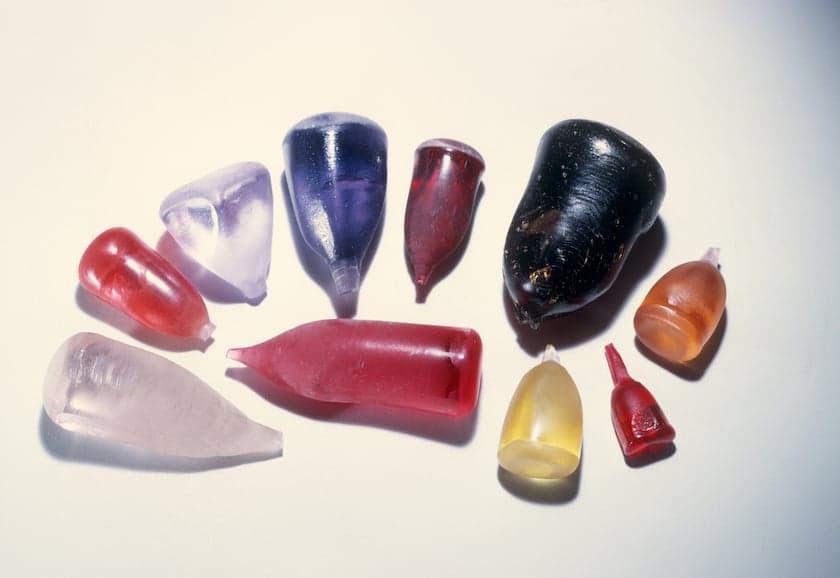
Flame-fusion grown corundum — rubies and sapphires — are among the most common synthetic gem materials. Inexpensive to manufacture, these lab-created stones come in a variety of colors and have the same exceptional durability as their natural counterparts. Therefore, gemologists must learn to identify these synthetic gems.
If your initial refractive index (RI) reading points towards corundum, you should next determine if your gem is natural or synthetic. First, examine the gem’s cut. Cheap lab-created rubies and sapphires don’t get the care natural stones do. You’ll find poor workmanship in synthetic corundum. Next, examine the interior. Synthetic corundum will lack crystal or silk inclusions. They’ll have clear interiors. However, they do have a unique type of inclusion: curved striae.
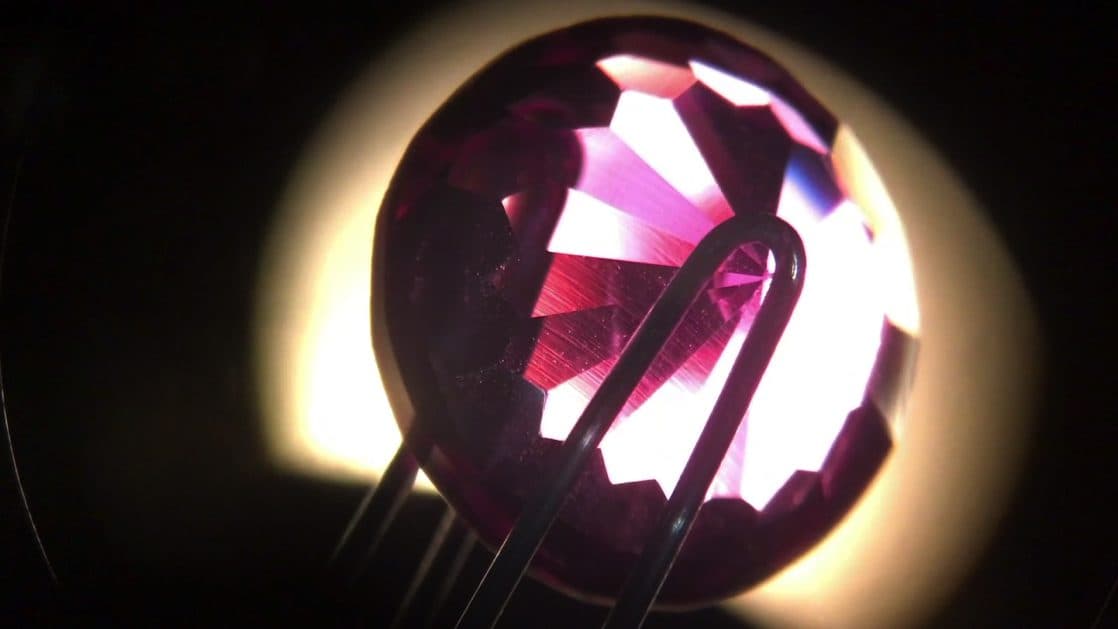
With diffused lighting, look for curved or straight growth lines in the interior of a stone. Natural corundum will only have straight growth lines, never curved lines. Curved lines or striae are difficult to distinguish, because their curvature is very subtle. Look at the following images. The picture on the left shows curved striae on the pavilion main facets of an emerald-cut gem.
…