Peridot Polishing Survey Results
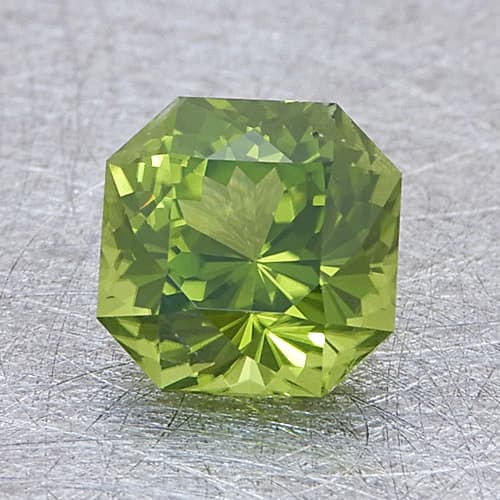
Popular jewelry stones, peridots can actually vary in hardness. Our IGS member survey results can help you choose the right tools and techniques for peridot polishing.
3 Minute Read
Editor’s Note: Some years ago, the International Gem Society (IGS) conducted a survey of members’ polishing techniques. Here, you’ll find the results for peridot polishing. Whether you’re just starting to learn the art of gem cutting or just looking for a new way to tackle a problematic gem material, we hope these results provide some useful suggestions.
Peridot varieties can vary in hardness. If you’re polishing forsterite (7), consult the survey results for polishing gems with 7-8 hardness. For fayalite (6.5) and tephroite (6), take a look at the results for polishing gems with 4-6 hardness.
For more information about the survey or to find results for more gemstones, click here.
Peridot Polishing Techniques
| Laptype | Polish | Lubrication | Votes |
| Tin | Linde A/Cerium | water | 20 |
| Tin | 50-100k diamond | oil or water | 10 |
| Ultra Lap | Aluminum Oxide | water | 6 |
| BATT | Linde A/Cerium | water | 5 |
| Last Lap | 50k diamond | vinegar/water | 3 |
| Lucite | 50-100k diamond | DiaLube or water | 3 |
| BATT | 50-100k diamond | oil | 3 |
| Ceramic | 100-200k diamond | none | 3 |
| Ceramic | 50k diamond | oil | 3 |
| Lucite | Cerium Oxide | water | 2 |
| Copper | Diamond paste | Crystalube | 2 |
| Zinc | 50k diamond | oil | 2 |
| Last Lap | Aluminum Oxide | water | 2 |
| Magic Wax | Linde |
…